
Intellectual property (IP) considerations in artificial intelligence (AI) present a distinct and rapidly evolving set of challenges that differ in meaningful ways from those faced in semiconductor and traditional software industries. While AI systems are often implemented through software and deployed on advanced hardware, their inventive processes, training methodologies, and model architectures introduce new questions about ownership, disclosure, replication, and strategic protection. As AI becomes embedded across industries, from pharmaceuticals to finance to autonomous systems, the stakes of getting IP strategy right continue to escalate.
Patents remain a central mechanism for protecting AI-related innovation. Yet AI complicates traditional patent doctrines in ways that demand careful, forward-looking strategy guided by experienced patent counsel. Unlike conventional inventions, where human engineers define the architecture and predict the outputs of a system, AI models, particularly large-scale machine learning systems, often generate results through training processes that are only partially interpretable, even to their creators. This opacity raises profound questions about enablement, inventorship, and disclosure that require sophisticated legal judgment.
Patent law is conditioned on inventors describing their inventions in sufficient detail to enable others skilled in the art to make and use them. Historically, this requirement has focused on the end product or process and how to achieve a particular technical result. But AI systems frequently rely on complex parameter configurations, probabilistic weight distributions, and training data interactions that are not fully understood or are largely unknown even to developers. The inner workings of the AI inventive process may not be transparent in any meaningful sense. As a result, the traditional disclosure model, centered on reproducibility through technical description, faces strain.
The lack of transparency surrounding AI parameters, model tuning decisions, and training dynamics makes it difficult to enable future practitioners to achieve the same end state. Two models with identical high-level architectures may behave differently depending on subtle differences in training data, initialization states, or optimization paths. If these elements are not described with sufficient specificity, a patent may nominally disclose an invention while failing to provide a realistic pathway to replication. Conversely, disclosing every parameter, dataset characteristic, and training methodology may be impractical, commercially undesirable, or even impossible if aspects of the model’s operation are emergent rather than explicitly engineered. Determining the appropriate level of disclosure in this context is not a routine drafting exercise. It requires close coordination with patent counsel who understand both AI technology and the evolving standards of enablement.
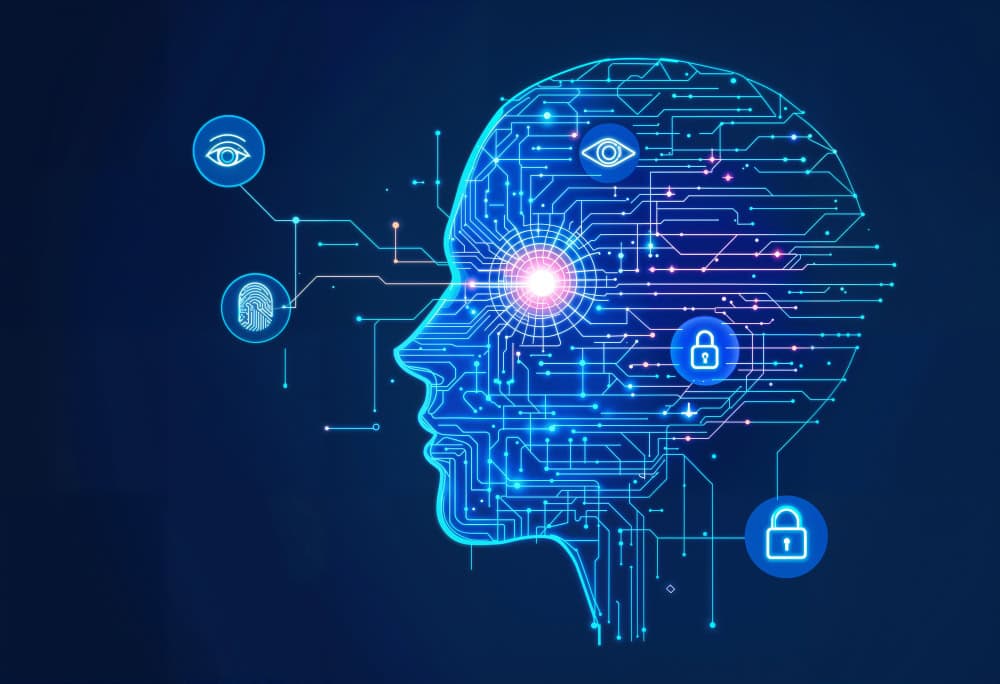
Patent law’s enablement doctrine traditionally focuses on whether the disclosure allows others to achieve the claimed result without undue experimentation. In contrast, AI presents a lack of transparency and difficulty in replication that profoundly and fundamentally challenge disclosure theory in patent law. The inventive step may lie not merely in the architecture or output, but in the training process, data curation strategy, or optimization methodology, each of which may resist precise articulation. This tension raises strategic questions about how to draft claims, what to disclose, and how to future-proof AI portfolios against both invalidity challenges and technological evolution. Experienced patent counsel play a critical role in navigating these questions and structuring applications that are both defensible and commercially meaningful.
Beyond enablement, AI also complicates inventorship. When an AI system contributes materially to the generation of a new compound, design, or algorithmic improvement, determining the proper human inventors can be non-trivial. Patent systems worldwide continue to require human inventorship, but AI-assisted discovery blurs the boundary between tool and collaborator. Organizations deploying AI in research and development must document human contributions carefully and structure workflows to preserve defensible inventorship positions. Failure to do so can jeopardize patent validity. Patent counsel are essential in establishing internal procedures that align technical development with legal requirements.
Trade secret protection plays an unusually significant role in AI strategy. Unlike physical devices that can be reverse engineered, many AI models operate as black boxes accessible only through application programming interfaces. Companies may choose to protect training data compositions, model weights, and tuning processes as trade secrets rather than disclose them in patent filings. However, reliance on trade secrets introduces its own risks, including employee mobility, collaboration leakage, and the possibility of independent development by competitors. Organizations must carefully balance the disclosure obligations of patent law against the confidentiality advantages of trade secret regimes. Patent counsel can help design integrated IP strategies that coordinate patent filings, confidentiality protocols, and contractual protections.
Data governance is another critical dimension. AI performance depends heavily on training data quality, provenance, and legality. Improperly sourced data can create downstream infringement or regulatory exposure. Moreover, datasets themselves may be subject to copyright, database rights, contractual restrictions, or privacy obligations. An AI IP strategy that focuses solely on patents without accounting for data rights leaves substantial risk unaddressed. Coordinated advice from patent counsel and regulatory specialists is essential to ensure that innovation does not outpace compliance.
Drafting strategy for AI patents must account for both legal doctrine and technological fluidity. Clear technical descriptions of architectures, training procedures, evaluation metrics, and alternative embodiments strengthen enforceability. Claims should anticipate variations in model size, parameterization, and deployment environments. At the same time, practitioners must avoid purely functional or abstract claim language that may trigger subject matter eligibility challenges. Strong AI patents do not emerge from templates or generic disclosures. They are the product of deliberate collaboration between technical teams and experienced patent counsel who understand how examiners and courts evaluate emerging technologies.
Finally, AI’s strategic importance extends beyond litigation and licensing. Robust patent portfolios signal technological leadership, attract investment, and shape industry standards. In competitive markets where differentiation may hinge on model performance, training efficiency, or integration capabilities, well-structured IP can create leverage in partnerships and cross-licensing negotiations. Conversely, weak or poorly conceived filings can expose companies to invalidity attacks, inventorship disputes, or unenforceable claims.

Artificial intelligence sits at the intersection of opacity and innovation. Its technical power derives from systems that learn, adapt, and sometimes surprise their creators. Patent law, however, is grounded in principles of transparency, attribution, and reproducibility. Bridging this conceptual divide requires deliberate, informed strategy. Engaging experienced patent counsel is not optional in this environment. It is a foundational step in building durable, defensible protection that aligns technical achievement with legal standards. Organizations that prioritize sophisticated legal guidance alongside technical excellence will be best positioned to secure meaningful and enforceable rights in an increasingly competitive and legally complex AI landscape.
Leave a message and we will contact you shortly.
In Bard Peripheral Vascular, Inc. v. W.L. Gore & Associates, Inc. 14-1114 – 2015-01-13, the Federal Circuit upheld a district court decision finding willful infringement....
This involves submitting a meticulously drafted document to the patent office that technically and legally describes your invention, officially starting the protection process.
This involves submitting a meticulously drafted document to the patent office that technically and legally describes your invention, officially starting the protection process.
This involves submitting a meticulously drafted document to the patent office that technically and legally describes your invention, officially starting the protection process.
Leave a message and we will contact you shortly.