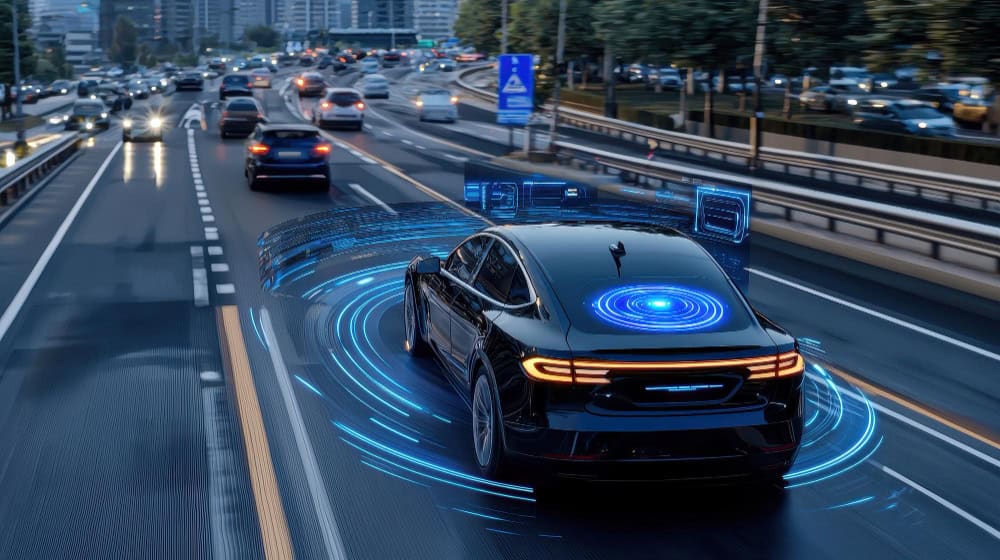
Autonomous vehicle technology has progressed dramatically over the past decade. Automotive manufacturers, semiconductor companies, software developers, sensor manufacturers, mapping providers, and artificial intelligence startups are all competing to develop self-driving systems capable of operating safely and reliably in complex environments. As the race toward autonomy accelerates, so does the competition to secure intellectual property rights and protect technological advancements in this domain. Patent strategy has become a central component of competitive positioning in the evolving mobility ecosystem.
The development of autonomous vehicles involves a convergence of multiple technical disciplines. Key technologies and intellectual property issues include automated driving systems, advanced driver assistance systems, collision avoidance technologies, sensor fusion architectures, lidar and radar systems, vehicle-to-everything communication protocols, high-definition mapping systems, artificial intelligence and machine learning models, and embedded control systems. Each of these domains presents independent patent opportunities and corresponding infringement risks.
Automated automotive technologies often build incrementally on existing mechanical and electronic systems. Improvements to steering actuators, braking systems, redundancy architectures, and power management systems may be patentable if they provide measurable safety, reliability, or efficiency benefits. Collision avoidance systems, including object detection, trajectory prediction, and emergency response mechanisms, frequently rely on sophisticated sensor integration and data processing techniques. Patent claims in these areas must clearly articulate how the system achieves technical improvements over prior art solutions.
Artificial intelligence and machine learning are central to autonomous vehicle functionality. Training models to interpret sensor data, recognize objects, predict pedestrian behavior, and optimize driving decisions presents significant innovation. However, portraying the strategies and elements of an autonomous vehicle framework in a patent application can be challenging. Patent offices require sufficient technical disclosure to demonstrate how the invention works and how it improves system performance. Describing the artificial intelligence process, including training methodologies, network architectures, parameter optimization, and iterative refinement of underlying algorithms, must be done with enough specificity to satisfy enablement and written description requirements.

At the same time, companies may be reluctant to disclose sensitive details regarding proprietary algorithms or model training datasets. Balancing the need for adequate disclosure with the desire to protect trade secrets requires careful planning. In some cases, a hybrid strategy combining patent protection for system-level innovations with trade secret protection for certain algorithmic details may be appropriate.
The automotive industry’s shift toward autonomy is also likely to increase intellectual property-related claims. Traditional vehicle manufacturers now compete with technology companies and electronics firms that bring different patent portfolios and enforcement strategies. Cross-industry collaboration has become common, but so have disputes. As autonomous systems become more commercially viable, infringement litigation, licensing negotiations, and cross-licensing arrangements are expected to increase.
Patent thickets are emerging in areas such as sensor technology, mapping systems, and communication protocols. A single autonomous vehicle platform may implicate thousands of patents across hardware, software, and networking layers. Comprehensive freedom-to-operate analysis is essential before large-scale deployment. Identifying potential blocking patents early allows companies to pursue licensing, redesign technical components, or file defensive patents to strengthen negotiation leverage.

Another significant challenge lies in the pace of technological development compared to the speed of the patenting system. Autonomous vehicle technologies evolve rapidly through software updates, iterative model training, and real-world data collection. By the time a patent application is examined and granted, the underlying system may have undergone multiple refinements. Strategic use of provisional applications, continuation filings, and portfolio layering can help maintain alignment between patent coverage and technological evolution.
Standardization efforts and regulatory frameworks also influence patent strategy. Communication protocols and safety standards may incorporate patented technologies. Companies contributing to standards must consider potential licensing obligations, while implementers must assess exposure to standard-essential patents. Coordinating patent strategy with participation in industry consortia is critical to managing long-term risk.
Drafting autonomous vehicle patents requires particular care. Claims that merely recite high-level goals, such as safer driving or automated navigation, are unlikely to withstand scrutiny. Instead, applications should describe concrete system architectures, data processing pipelines, sensor configurations, decision-making modules, and fail-safe mechanisms. Technical improvements to latency reduction, data fusion accuracy, redundancy management, or computational efficiency strengthen patentability arguments and enhance enforceability.

Ultimately, intellectual property in the autonomous vehicle sector serves both offensive and defensive purposes. Patents can deter competitors, facilitate strategic partnerships, support investment, and create revenue through licensing. They also provide protection against infringement claims by establishing a portfolio that can be used in cross-licensing negotiations.
Given the technical complexity, rapid innovation cycles, and high litigation potential in this space, engaging experienced patent counsel is essential. Skilled advisors can help map crowded patent landscapes, structure layered filing strategies, balance disclosure with trade secret protection, and align intellectual property planning with regulatory and commercialization milestones. Companies that integrate patent strategy into their autonomous vehicle development efforts from the outset will be better positioned to secure durable protection and compete effectively in the race toward fully autonomous mobility.
Leave a message and we will contact you shortly.
In Bard Peripheral Vascular, Inc. v. W.L. Gore & Associates, Inc. 14-1114 – 2015-01-13, the Federal Circuit upheld a district court decision finding willful infringement....
This involves submitting a meticulously drafted document to the patent office that technically and legally describes your invention, officially starting the protection process.
This involves submitting a meticulously drafted document to the patent office that technically and legally describes your invention, officially starting the protection process.
This involves submitting a meticulously drafted document to the patent office that technically and legally describes your invention, officially starting the protection process.
Leave a message and we will contact you shortly.