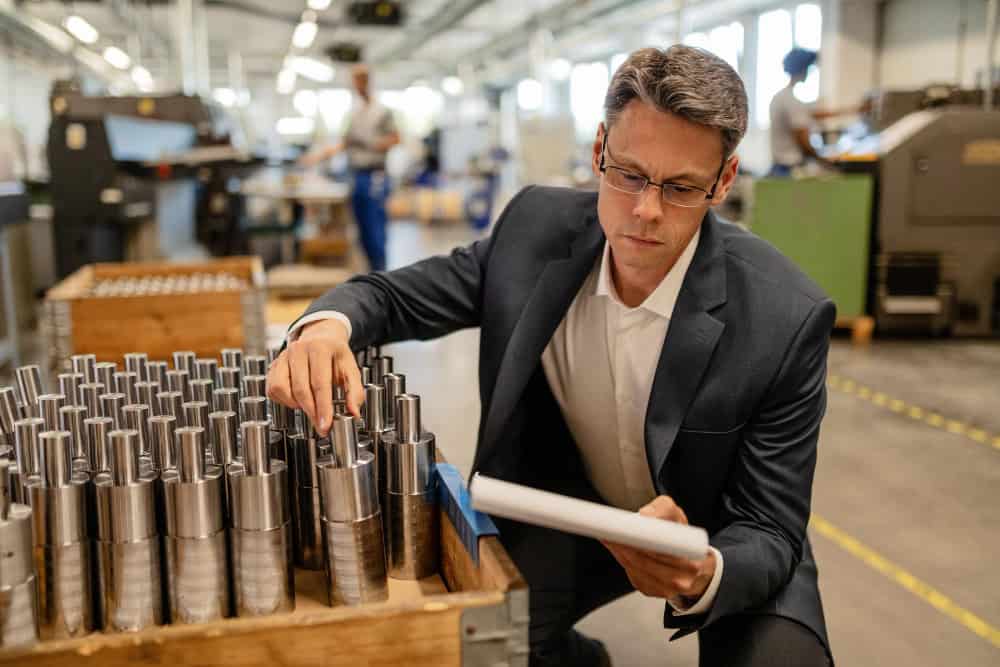
An important recent trend for the manufacturing sector has been that the supply chain setbacks caused by the COVID-19 pandemic and tariff-related disruptions have created a great deal of interest in shortening supply chains or making them better managed. Many companies are investing in moving manufacturing back to the United States (US) or to other countries, or are focusing on technology investments such as ever-more-capable industrial robotics or additive manufacturing, or on organizational improvements like warehouse space optimization.
Companies looking to reshore manufacturing in the US that have been manufacturing overseas probably have less of an IP challenge, as they likely have already been paying attention to US patents that could cover products that they are importing into the country. In other fields such as computer software, there can be notable complications in IP protection with inventions being practiced across borders. (For example, as set forth in NTP, Inc. v. Research in Motion, Ltd., 418 F. 3d 1282, 1318 (Fed. Cir. 2005), “a process cannot be used ‘within’ the United States as required by section 271(a) unless each of the steps is performed within this country,” which means that, often, if a server is located in one country and a client is located in another country, this can be a barrier to infringement.) In manufacturing, however, US patent law applies patents extraterritorially to some extent. Importing an article into the U.S. that was manufactured using a patented process outside the US is considered direct patent infringement under 35 U.S.C. § 271(g), even if the product itself is not patented.
Companies looking to manufacture in some new country may have to be concerned with a completely new IP rights landscape. The US’s extraterritoriality provision is uncommon, and for the most part, patents and other intellectual property are strictly national rights, applicable only to the country in which they have been filed. This means that, if the country has not been a manufacturing hub for long, few companies may have filed anything in the country and there may be few patent rights to worry about, but the legal system may not have much existing experience with enforcing any rights that do exist.
A bigger practical challenge facing manufacturers may come from the proliferation of increasingly inexpensive and high-quality additive manufacturing machinery. It has historically been very expensive to assert a patent right, with even the most basic and routine patent litigation costing hundreds of thousands of dollars at minimum. This means that, often, a patent owner will have trouble going after small-time infringers economically. Manufacturing has traditionally had a high barrier to entry, with many traditional techniques requiring production runs of tens of thousands of units to be economical, but additive manufacturing processes can allow small companies to rapidly produce products, which means that it can allow small companies to rapidly produce infringing products in such a way that they cannot be economically sued.
In many cases, small companies must sell through a larger storefront like Amazon, which has a streamlined process for enforcement of patent rights called Amazon’s Patent Evaluation Express, or the APEX program. Patent owners may also benefit from seeing if they can benefit from other IP rights, such as design patents or trade dress protections on a product’s shape or appearance, relying overall on a layered enforcement strategy.
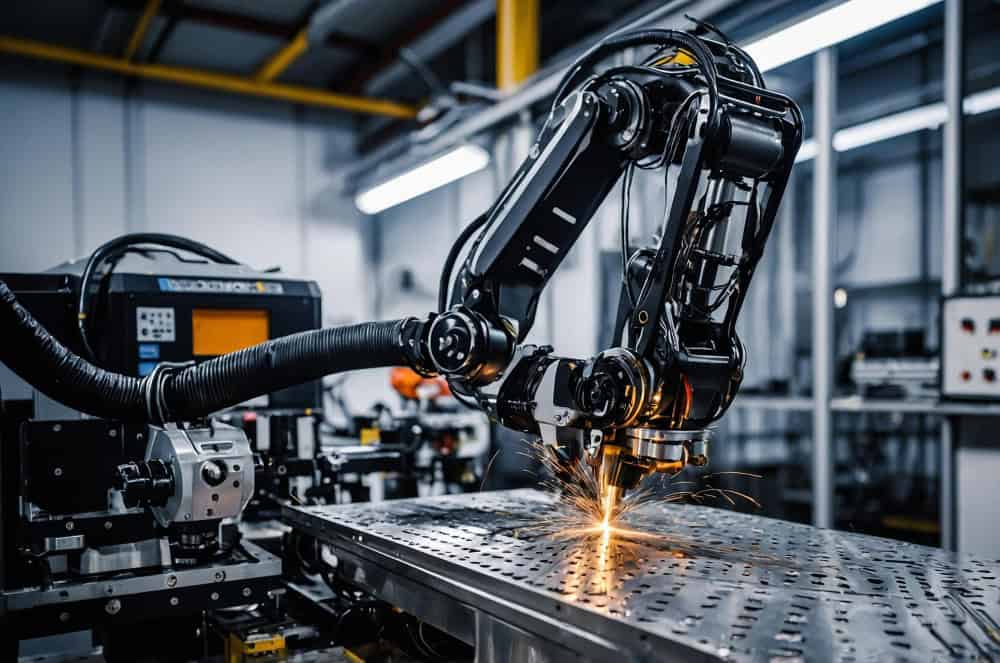
Finally, the proliferation of computer software in control of manufacturing processes means that manufacturers increasingly have to be aware of challenges from different IP fields, where they may encounter issues that are new to them but old to others. For example, industrial robots are increasingly able to incorporate machine learning to improve their own finesse and problem-avoidance, being able to learn how to handle any kind of item through trial and error like OpenAI’s Dactyl; another example is that logistical systems are increasingly complex, incorporating RFID tracking and automated warehouse management. This means that manufacturers may increasingly have to deal with patent eligibility concerns under 35 U.S.C. §101, issues with fully and completely describing how the invention works under 35 U.S.C. §112(a), or problems with enforcing their patents against competitors who have positioned their servers overseas.
While in most cases it should not be difficult to link any computer software innovation in the manufacturing space to a particular “practical application” that affects something in the physical world – which should help position their cases well for §101 – manufacturers newly grappling with this issue may struggle a little and may end up abandoning too much of their invention to the public by narrowly claiming it. Written description and enablement issues under §112(a), however, can often sink a patent application completely if the operations of any computer software are not described well enough to allow a reader to understand the invention fully. A skilled patent practitioner with experience in these other fields can be vital for avoiding these problems.
Leave a message and we will contact you shortly.
In Bard Peripheral Vascular, Inc. v. W.L. Gore & Associates, Inc. 14-1114 – 2015-01-13, the Federal Circuit upheld a district court decision finding willful infringement....
US law has required that for a patent to be infringed, there must be at least one underlying direct infringement where all of the elements of at least one patent claim are met. In cases where part of a process can be practiced in the US and part of the process can be practiced in another country, the US courts have found that no direct infringement occurred. The NTP v. Research in Motion case referred to above concerned a server located outside of the US, which, though it provided a service to people in the US, did not perform its processes in a way subject to US jurisdiction, which meant that the method claim at issue was not infringed.
Similarly, in order to successfully enforce a method claim of a patent, as set forth in Limelight Networks, Inc. v. Akamai Techs, Inc., 572 U.S. 915 (2014), all steps of the method must be attributable to a single party, either directly or through one party exercising “direction and control” over others. If multiple cooperating infringers are able to each perform different stages, it can potentially be more difficult to prove this necessary aspect of infringement.
Manufacturers may have to be more aware of how they structure claims for manufacturing processes, particularly those that involve machinery that may be operated by complex software. For example, it may be helpful to keep the claims structured as being from the perspective of one device or the other (e.g. an AI-equipped server sending specific commands to the robot and receiving particular feedback).
The case law regarding 35 U.S.C. §101 and 35 U.S.C. §112(a) is critical of patent specifications and claims that attempt to monopolize the practice of solving a particular problem. This means that, for software claims, the courts often look much more favorably on patents that go into significant detail about how certain software tasks are performed. For example, if the software is driven by a neural network model, what type of neural network model is acceptable? How is the system trained, and with what data? What prompts retraining of the system? What specific outputs is the system equipped to provide?
This can be analogized to the higher standards for enablement that are needed for the “unpredictable arts” like chemistry and material science, where outcomes of modifications are difficult to foresee. In such practices, it is much more common to provide detailed examples of exactly how a process is performed.
Leave a message and we will contact you shortly.